Report Highlights 13,000 Unsafe Buildings Across Mumbai
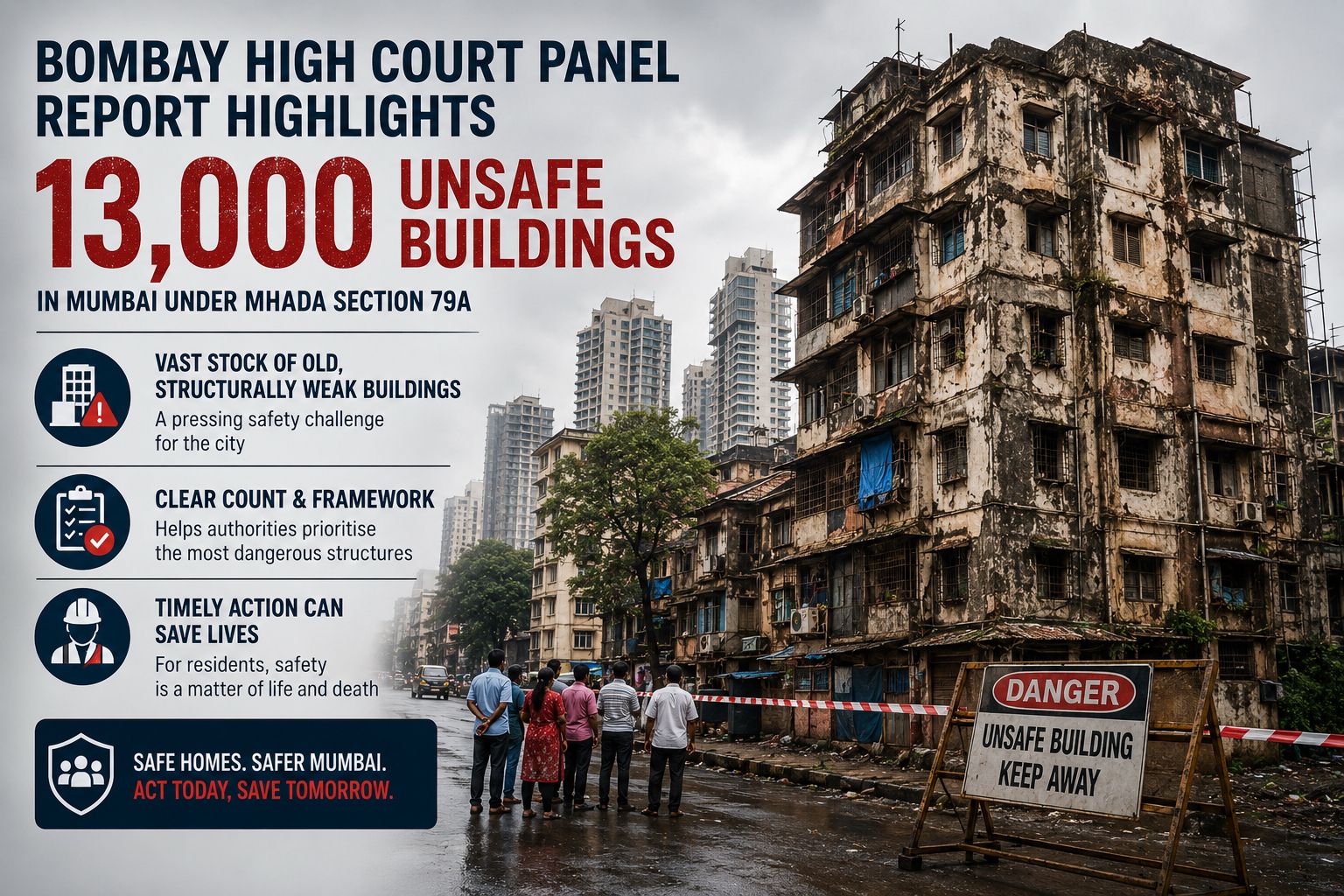
Report Highlights 13,000 Unsafe Buildings Across Mumbai
A report submitted to the Bombay High Court while examining matters related to MHADA's Section 79A has brought attention to approximately 13,000 unsafe buildings across Mumbai. The findings highlight the magnitude of the city's ageing building stock and reinforce the urgent need for repairs, structural audits, and redevelopment initiatives in vulnerable areas.
Mumbai is home to thousands of ageing residential and commercial structures, many of which were constructed decades ago. As buildings grow older, concerns related to structural integrity, maintenance, safety standards, and habitability become increasingly important. The identification of unsafe structures provides authorities with a clearer picture of the challenges facing the city's built environment.
For residents living in such buildings, safety concerns often become an everyday reality rather than a long-term planning issue.
Why Unsafe Buildings Are a Growing Concern
Mumbai's urban landscape includes a large number of old buildings that have been exposed to decades of weather conditions, environmental stress, and varying levels of maintenance. Over time, structural deterioration can increase risks to occupants, particularly during periods of heavy rainfall and adverse weather conditions.
Unsafe buildings not only pose risks to residents but can also affect neighbouring properties, public spaces, and surrounding infrastructure. As a result, identifying vulnerable structures and prioritising remedial action is a critical responsibility for civic and housing authorities.
The challenge is particularly significant in older parts of the city where ageing housing stock remains a dominant feature of the urban environment.
The Importance of Accurate Assessment
A clear assessment of unsafe buildings is essential for effective planning and resource allocation. When authorities have access to reliable data regarding the number and condition of vulnerable structures, they can prioritise interventions based on risk levels and urgency.
Such assessments also help determine whether buildings require repairs, structural strengthening, evacuation measures, or complete redevelopment. The availability of a structured framework can improve decision-making and support a more coordinated approach to addressing safety concerns.
For policymakers and administrators, accurate identification is the first step towards implementing long-term solutions.
Redevelopment as a Long-Term Solution
In many cases, redevelopment offers the most practical long-term solution for ageing and structurally weak buildings. Redevelopment allows older structures to be replaced with modern buildings that comply with current construction standards, safety requirements, and infrastructure expectations.
Mumbai increasingly relies on redevelopment to create new housing supply while improving living conditions in established neighbourhoods. By replacing unsafe buildings with modern developments, the city can address both safety concerns and housing demand simultaneously.
The scale of the challenge highlighted in the report reinforces the importance of accelerating redevelopment in appropriate locations while ensuring that residents are adequately protected throughout the process.
What It Means for Residents
For people living in buildings identified as unsafe, timely action can be critical. Structural issues often worsen over time, making early intervention important for protecting lives and property.
Residents benefit when authorities establish clear priorities, transparent processes, and practical solutions for repairs or redevelopment. The identification of unsafe buildings also helps create greater awareness about the importance of regular maintenance, structural audits, and compliance with safety recommendations.
Ultimately, improving building safety is not only a redevelopment issue but also a public safety priority for Mumbai's future.
Expert View
"Building safety must remain one of the highest priorities in a city with a large stock of ageing structures. Identifying unsafe buildings is an important first step, but timely repairs, redevelopment, and coordinated action are essential to protect residents and ensure sustainable urban renewal." — Sandeep Sadh