Major Developers Compete for 206-Acre Mumbai Redevelopment Project
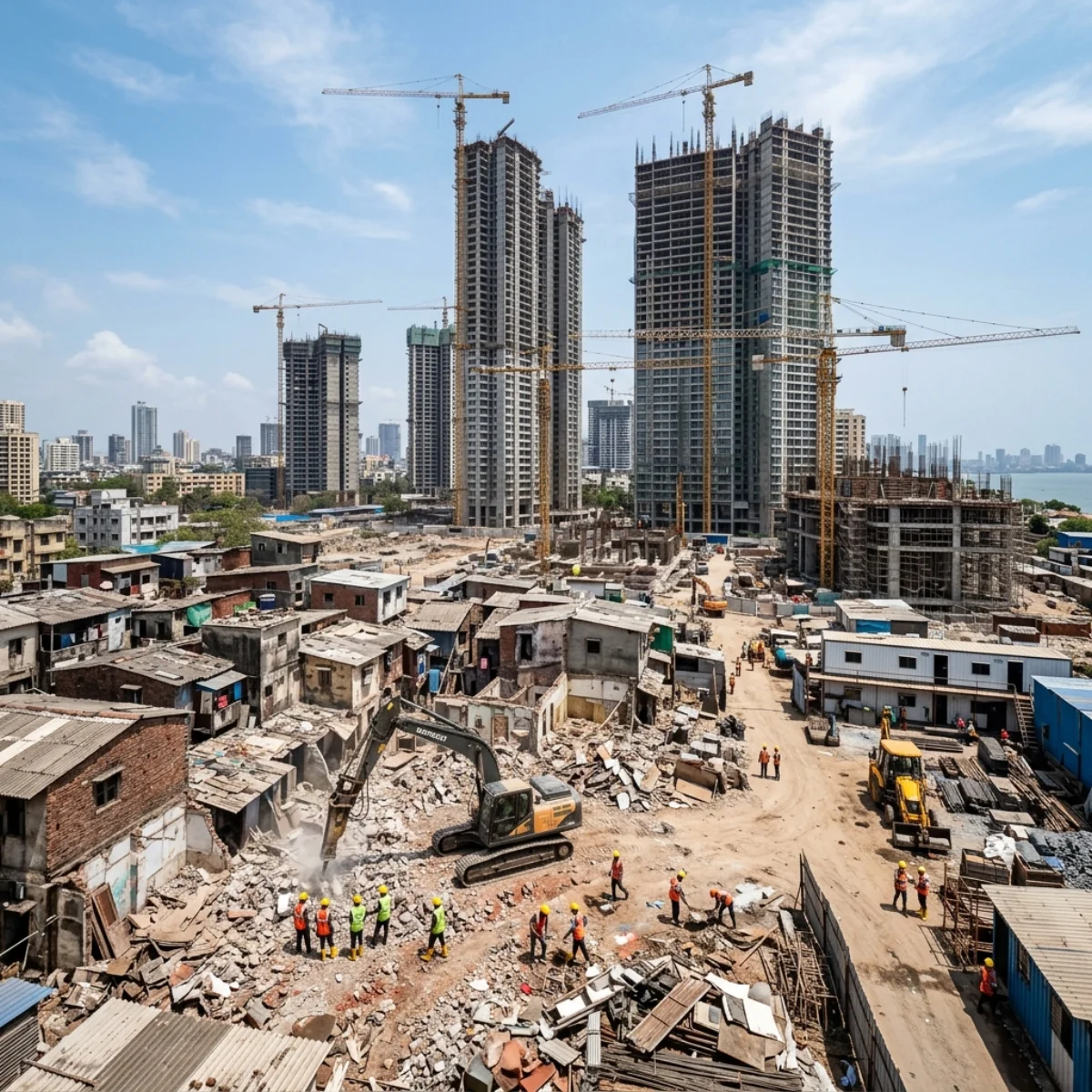
Major Developers Compete for 206-Acre Mumbai Redevelopment Project
Some of India's biggest corporate and real estate groups, including Adani, Reliance, Lodha, and JSW, are among the bidders for a massive 206-acre redevelopment project in Mumbai. The strong interest from multiple large-scale developers underscores the significance of the project and its potential to reshape a substantial portion of the city's urban landscape.
Large redevelopment opportunities of this scale are exceptionally rare in Mumbai, where land availability remains severely constrained. As a result, projects involving hundreds of acres often attract intense competition from well-capitalised developers seeking long-term growth opportunities in one of India's most valuable property markets.
The level of interest generated by the project reflects both its development potential and the continued confidence major players have in Mumbai's long-term real estate prospects.
Why a 206-Acre Redevelopment Is Significant
Mumbai's future growth is increasingly dependent on redevelopment rather than new greenfield development. With very little vacant land available, large-scale urban renewal projects provide one of the few opportunities to create meaningful housing and commercial supply within the city.
A redevelopment spanning 206 acres offers the potential to transform an entire urban district rather than a single property or housing society. Projects of this size can accommodate modern residential developments, commercial spaces, public amenities, infrastructure upgrades, and community facilities within a comprehensive master-planned framework.
The scale alone makes it one of the more important redevelopment opportunities currently under consideration in the city.
Why Major Developers Are Interested
Large developers are typically attracted to projects that offer long-term development potential and the ability to create integrated urban environments. Redevelopment opportunities of this magnitude can support phased development over several years while generating substantial housing and commercial inventory.
The participation of multiple established groups also highlights the confidence that major developers continue to place in Mumbai's property market. Despite challenges related to land availability, development costs, and regulatory processes, the city remains one of the country's most important real estate destinations.
Competition among leading bidders often reflects expectations of strong long-term demand and future value creation.
Potential Benefits for Residents
One of the primary objectives of large redevelopment projects is the rehabilitation of existing residents into modern housing. Redevelopment allows ageing structures to be replaced with safer and more efficient buildings while improving overall living conditions.
Residents may benefit from upgraded homes, enhanced infrastructure, better public amenities, improved open spaces, and modern community facilities. In many cases, redevelopment also addresses long-standing issues related to building safety, maintenance, and urban planning.
The success of such projects depends heavily on balancing rehabilitation requirements with broader development objectives.
Impact on Housing Supply and Urban Renewal
A redevelopment project covering hundreds of acres can make a meaningful contribution to Mumbai's housing supply. By creating additional residential inventory, such developments can help meet growing demand while modernising older parts of the city.
Beyond housing, large projects often improve transportation networks, public infrastructure, community facilities, and the overall urban environment. This makes redevelopment an important tool not only for creating homes but also for supporting wider city transformation.
As Mumbai continues to rely on redevelopment to accommodate future growth, projects of this scale are likely to play a major role in shaping the city's evolution.
What Strong Bidder Interest Indicates
The participation of several major groups is a positive signal for the project's prospects. Competitive bidding can improve the likelihood of securing a developer with the financial strength, technical expertise, and execution capability needed to manage a complex redevelopment initiative.
Well-funded developers are generally better positioned to undertake large rehabilitation programmes, manage long project timelines, and deliver extensive infrastructure improvements. Strong competition can therefore contribute to better project outcomes for both residents and the city.
The level of interest in the project reinforces the attractiveness of large-scale redevelopment opportunities within Mumbai's real estate market.
Expert View
"Large redevelopment projects represent some of the most important opportunities in Mumbai's real estate sector. The participation of multiple major developers reflects confidence in the project's scale, location, and long-term potential. Strong competition is encouraging because it increases the likelihood of a well-funded and professionally executed redevelopment that benefits both residents and the city." — Sandeep Sadh